

Public relations is one of the most useful marketing tools for businesses with a real story to tell. It helps you explain your work through trusted third-party channels, which can build credibility in a way paid adverts rarely can.
Why does PR build trust?
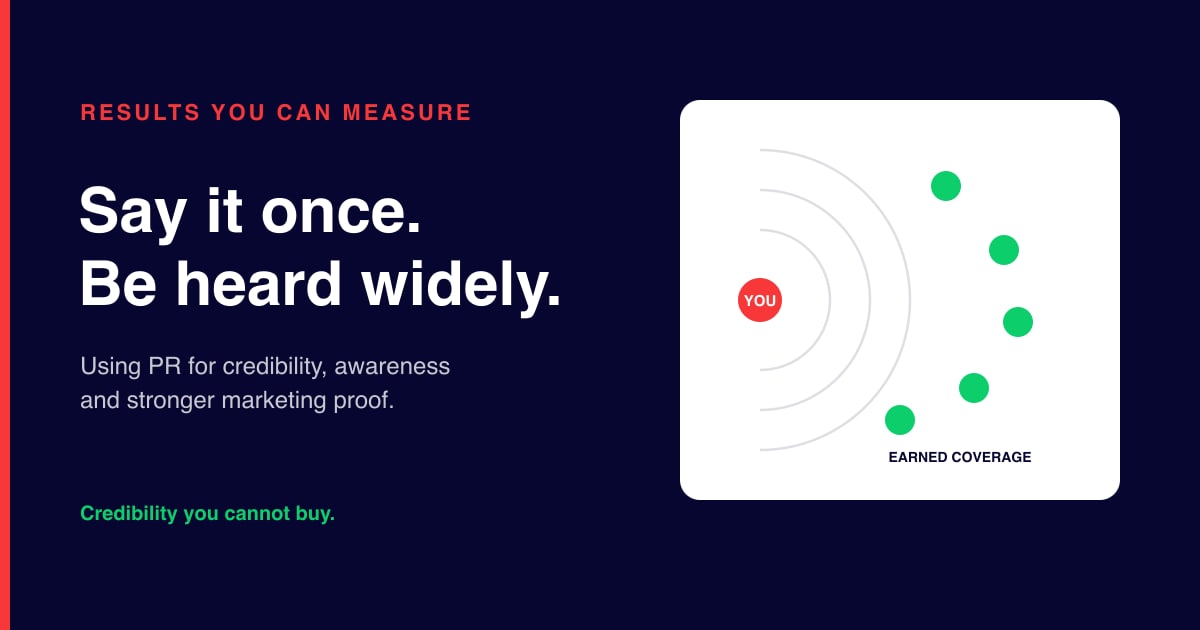
When a journalist, trade publication or local media outlet covers your business, the message does not only come from you. That third-party context can make the story feel more credible.
Good PR is not just publicity. It is a way of helping the right audience understand why your work matters.
What kinds of PR stories work best?
The strongest stories usually focus on the audience, not the business. Useful angles include:
- Client success stories
- Industry trends and expert commentary
- Local business growth or community impact
- Product or service launches
- Useful data or reports
- Awards, certifications and milestones
- Human stories from inside the business
The key is to ask: why would this be useful, interesting or timely for the reader?
How does PR support SEO?
PR can support SEO by earning mentions and links from relevant websites. Those signals can improve authority, but the benefit is not only technical.
A good PR story can also create search demand, give people a reason to look you up, and provide proof that can be reused on service pages, landing pages and proposals.
How does PR connect to the rest of marketing?
PR is most valuable when it is joined up with your wider marketing. A piece of coverage can become:
- A proof point on your website
- A LinkedIn post
- A sales email
- A case study prompt
- A PPC landing page trust signal
- A source for thought leadership content
That is why PR should sit inside a wider marketing consultancy plan rather than being treated as a one-off announcement.
How to start
List three things your business knows that your customers would genuinely find useful. Then list three examples of work that prove those points. Somewhere in that overlap is likely to be a PR story.
Before pitching, make sure your website explains the story clearly. If coverage sends people to a confusing site, the opportunity weakens.
Related services
- Marketing Consultancy for shaping PR into the wider plan
- Copywriting for pitches, articles and story angles
- Branding for making the message consistent when attention arrives
FAQs
Is PR better than advertising?
It is different. Advertising buys placement. PR earns attention through a story. The strongest marketing often uses both, with each doing a different job.
Can small businesses use PR?
Yes. Local stories, trade expertise and niche commentary can be very effective for smaller businesses when the angle is specific and useful.
Does PR guarantee coverage?
No. PR is influenced by timing, relevance and editorial judgement. A good strategy improves the chance by making the story clearer and more useful to the publication.
What should happen after coverage?
Share it, link to it where appropriate, add it to your proof assets, and use it to support future content, sales conversations and search visibility.
Want your story to work harder?
If you have useful work, proof or expertise but are not sure how to communicate it, book a call and we can help shape the story.