

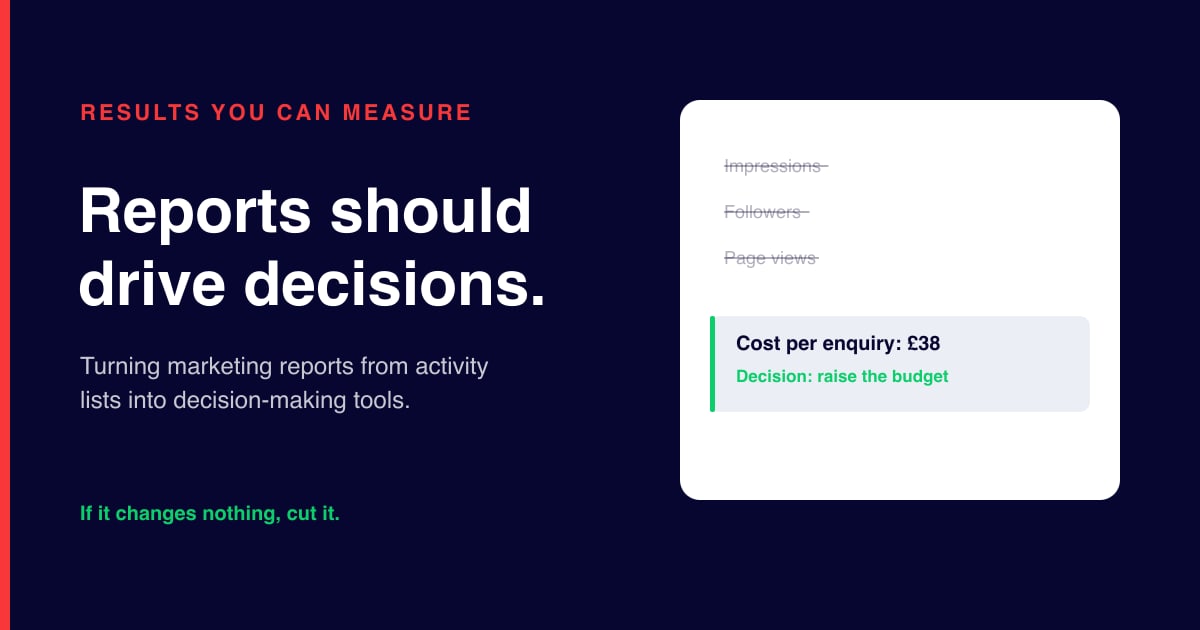
Most marketing reports are full of numbers, but not all of those numbers help you make a better decision. A useful report should show what changed, what mattered, what it means commercially, and what should happen next.
What should a marketing report include?
A good marketing report should answer five simple questions:
- What did we do?
- What changed?
- Did that change create useful enquiries?
- What did those enquiries cost?
- What should we do next?
That means the report needs more than campaign activity. It should connect SEO, PPC, copywriting, website changes and sales feedback into one view.
Useful sections include:
- Total enquiries by source
- Qualified enquiries by source
- Cost per useful enquiry
- Website conversion rate
- Search visibility for commercially relevant terms
- Best-performing pages and offers
- Lost opportunities or weak points
- The next recommended action
Which numbers matter most?
The most useful numbers are the ones that help you decide where to spend time and budget. Traffic can be useful, but only if it leads to the right kind of attention. Impressions can be useful, but only if they are building awareness with the right audience. Rankings can be useful, but only if they relate to searches that bring customers closer to buying.
For most businesses, the key measures are:
- Leads from each channel
- Lead quality, not just lead volume
- Cost per lead and cost per qualified lead
- Conversion rate from visit to enquiry
- Quote value or pipeline value where available
- Which activity should be stopped, continued or improved
This is why reporting often sits inside marketing consultancy rather than as a standalone spreadsheet exercise. The numbers only matter when they change what you do next.
How often should marketing be reviewed?
Monthly is usually enough for decision making. Weekly checks can be useful for active PPC campaigns, launches or fast-moving projects, but monthly reporting gives enough time for meaningful patterns to appear.
The best rhythm is:
- Weekly checks for live spend, tracking issues and urgent problems
- Monthly review for performance, lessons and priorities
- Quarterly review for positioning, budget and bigger strategic decisions
How to start
Start with a one-page version of the truth. List each active marketing channel, what it costs, how many enquiries it creates, and what happened to those enquiries. If the data is missing, that is the first useful finding.
Then ask: which activity would we confidently pay for again next month?
That question usually reveals whether the report is helping or hiding the real problem.
Related services
- Marketing Consultancy for joined-up reporting and 90-day planning
- PPC Management for paid campaign clarity
- SEO For AI and Humans for organic search visibility tied to enquiries
FAQs
What is the difference between a marketing report and a dashboard?
A dashboard shows live numbers. A report explains what those numbers mean and what should happen next. You often need both, but the recommendation is what makes the report valuable.
Should a marketing report include sales data?
Yes, where possible. Marketing should not stop at the enquiry form. If you can connect leads to quotes, proposals and sales, the report becomes much more useful.
Are rankings and impressions still worth reporting?
Yes, but they should not sit alone. Rankings and impressions are supporting indicators. They become more useful when connected to pages, enquiries and customer intent.
What if we do not have enough data yet?
Then the report should say that clearly and focus on fixing tracking, setting baselines and choosing the few numbers that will matter most next month.
Want a report that leads somewhere?
If your current reporting shows activity but not confidence, book a call and we can help turn it into a clearer view of what is working, what is wasting time, and what to do next.