

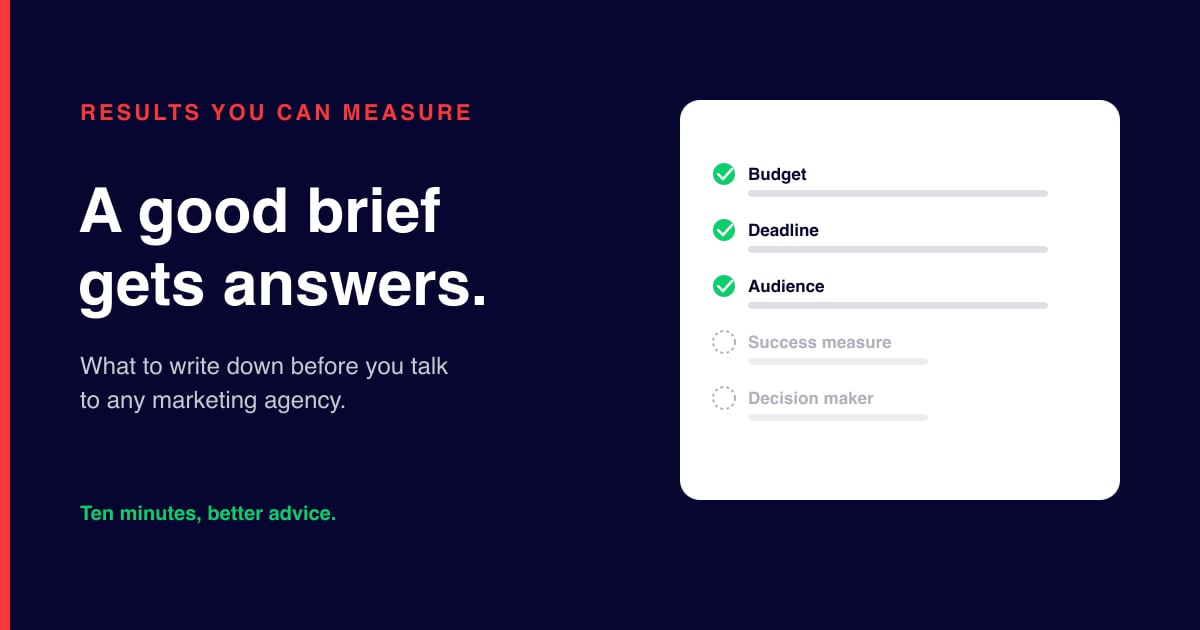
A good marketing brief does not need to be long. It needs to explain the business problem, the current situation, what has already been tried, and what a useful result would look like.
What should a marketing brief include?
A practical brief should include:
- What the business sells
- Who the best customers are
- What problem you want marketing to solve
- What activity is already happening
- What has worked or failed before
- What numbers you currently trust
- What budget or level of investment is realistic
- Who will be involved in decisions
You do not need to have all the answers. In fact, part of the agency’s role is to help find them. But giving context saves time and reduces guesswork.
What problem are you really trying to solve?
Many briefs start with a requested deliverable: a new website, more SEO, a PPC campaign, a brand refresh. Those may be right, but the deeper question is why.
For example:
We need a new websitemight mean the current site is not creating trust.We need SEOmight mean the business is too dependent on referrals.We need better brandingmight mean the offer is hard to explain.We need PPCmight mean sales need more predictable enquiry flow.
The more clearly you describe the business problem, the better the recommendation.
Should you share budget?
Yes. A budget range helps an agency recommend the right scale of answer. It avoids wasting time on plans that are either too thin to work or too large to be sensible.
Good agencies should be able to explain what is realistic at different investment levels and where the risk sits.
What numbers should you bring?
Bring whatever you have, even if it is incomplete:
- Website traffic
- Enquiries per month
- Conversion rate
- Average sale or project value
- Current marketing spend
- PPC spend and cost per lead
- Search visibility
- Sales feedback
If the numbers are messy, that is useful too. It may show that the first job is marketing consultancy and reporting rather than another campaign.
How to start
Write one paragraph that finishes this sentence:
We are talking to an agency because...
Then add three bullets:
- What we want more of
- What we want less of
- What we need to understand better
That is enough to start a useful first conversation.
Related services
- Marketing Consultancy if you need help defining the problem
- Web Development if the website is part of the issue
- Branding if the offer or positioning feels unclear
FAQs
Do we need a formal document?
No. A clear email or shared note is enough. The quality of thinking matters more than the format.
Should we brief several agencies at once?
You can, but make sure each one receives the same context and decision criteria. Otherwise you will compare very different answers.
What if we do not know the budget?
Share a sensible range or ask what level of investment would be needed for different outcomes. No one benefits from pretending budget is not part of the decision.
What should happen after the brief?
You should get honest questions, a clear recommendation and a practical next step. If the answer is vague, the agency may not understand the problem yet.
Want a useful first conversation?
If you know something needs to change but are not sure what to brief, book a call and we will help you shape the problem before we suggest the work.